When a seasoned political strategist who has survived decades of electoral storms admits behind closed doors that he lacks a clear path forward, the Israeli political landscape faces a seismic shift. The leaks detailing Prime Minister Benjamin Netanyahu’s private conversations reveal a rare glimpse of vulnerability. Stripped of official public relations spin, Netanyahu’s acknowledgment that Likud has lost ten key seats in recent polling highlights a reality that goes beyond standard campaign friction. For the first time in recent memory, the master architect of right wing coalition building appears trapped without a viable counter narrative.
The panic inside Balfour Street and Likud headquarters is not rooted in pressure from the political left or center. Historically, Netanyahu has excelled at consolidating the nationalist base when challenged by opposition figures from the center left. His campaigns relied on framing elections as binary choices between a strong national stance and an accommodating foreign policy. Today, that classic formula is failing. The threat to Netanyahu’s grip on power is coming directly from within his own ideological camp.
The entry of retired Brig. Gen. Ofer Winter and his new party into the national arena has disrupted the political dynamic. Winter, a recognized figure among religious nationalist and security minded voters, speaks directly to a constituency that supported Likud and its right wing coalition partners for years. By introducing a slate of political newcomers who served on the frontlines following the October 7 massacre, Winter presents a challenge to Likud’s core messaging. He frames the choice facing voters not through traditional partisan lines, but as a generational divide between established political leadership and those shaped by combat and security realities.
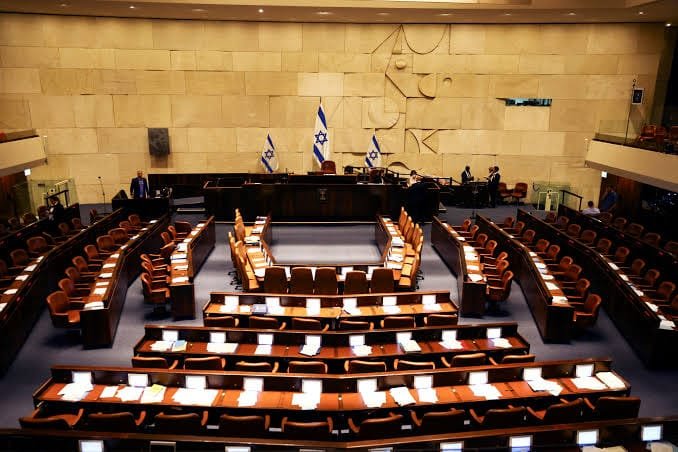
This dynamic strikes at Likud’s electoral foundation. In Israeli parliamentary politics, a party does not need to lose massive numbers of voters across the entire spectrum to trigger a coalition collapse. A shift of just four to five seats can dismantle the structural integrity of a coalition block. Recent surveys indicating that Winter’s movement, People of Israel, is drawing away conservative votes point to a broader vulnerability: the potential fragmentation of the right wing bloc.
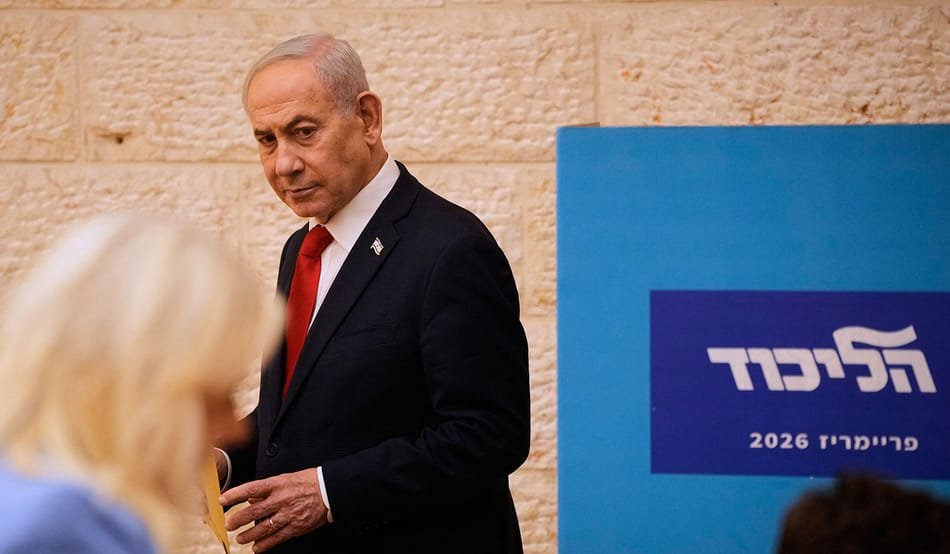
Particularly dangerous for Netanyahu’s prospective coalition is how this realigns smaller coalition partners. When votes shift to a new right wing alternative, parties near the electoral threshold face the risk of total elimination from the Knesset. Finance Minister Bezalel Smotrich’s Religious Zionist Party is already hovering near that dangerous edge in recent polling. In Israel’s proportional representation system, a party dropping below the 3.25 percent threshold results in wasted votes for that entire camp, potentially clearing a smooth path for opposition coalitions to secure a decisive parliamentary majority.
Netanyahu’s skepticism regarding favorable internal polls reveals an acute awareness of these structural mechanics. He understands that surface level polling numbers can mask deep seated voter fatigue. For years, Likud maintained dominance by serving as the big tent party of the Israeli right, balancing secular traditionalists, religious Zionists, and security hawks under Netanyahu’s central command. However, prolonged conflict, unresolved domestic tensions, and persistent economic pressures have severely strained that broad alliance.
The strategic dilemma for Likud is that standard tactical playbooks no longer yield predictable results. Traditionally, when challenged on the right, Netanyahu would execute a cannibalistic campaign to siphon votes back from smaller right wing partners. Yet stripping votes from allies like Smotrich or Itamar Ben Gvir offers little relief if it drives those parties below the electoral threshold, effectively destroying the majority needed to form a governing coalition. Conversely, attacking new right wing entrants risks alienating voters who view figures like Winter as authentic representatives of national security and public service.
This friction is further complicated by the diverse appeal of alternative slates. By including prominent figures such as Arab Israeli advocate Yoseph Haddad, new political movements are presenting a broader nationalist identity that challenges traditional political categories. This shifts the debate away from basic party loyalty toward urgent questions of governance, military accountability, and tangible security results.
Likud’s official response, dismissing reports as fake news and insisting on a future victory, serves as standard political messaging. Yet behind closed doors, the mathematical reality remains stark. The party faces an electorate that has grown increasingly resistant to standard campaign slogans. When voters who traditionally form Likud’s base begin looking for alternatives that promise decisive leadership without historical political baggage, the traditional campaign apparatus struggles to adapt.
The upcoming election is turning into a fundamental referendum on the future direction of the Israeli right. For over a decade and a half, Netanyahu defined what it meant to lead the nationalist camp. Today, that monopoly is eroding rapidly. As right wing voters consider options that emphasize security credentials and political renewal, Likud finds itself defending its past record rather than driving the national agenda.
Without a compelling strategy to re engage disillusioned voters, Likud faces the prospect of shrinking parliamentary numbers. In a system determined by tight margins, losing ten seats is not a temporary setback; it is a structural shift that could redraw the map of Israeli politics. Whether Likud can pivot and reconstruct its core coalition remains uncertain, but one reality is clear: the political dynamics that sustained Netanyahu’s dominance are shifting, leaving the ruling party searching for answers in an increasingly volatile political environment.