
Strategic Assessment: Structural Mutation, Asymmetric Resilience, and Post-Conflict Governance
The debate over whether Hamas can actually be destroyed has shifted from a theoretical exercise into an urgent strategic puzzle for Israel’s security establishment. As the multi front conflict grinds into its third year and enters an unpredictable phase, analysts inside and outside the defense sector are having to confront an uncomfortable reality. Declaring the total eradication of the movement is premature comfort at best. While the group’s administrative grip on Gaza has shattered and its military infrastructure has absorbed catastrophic blows, the organization is undergoing a structural mutation rather than actually disappearing from the map.
For military leadership in Tel Aviv, the real friction lies in defining what victory even looks like here. If victory requires completely erasing an ideology embedded within a fractured, deeply traumatized civilian population, the objective stays elusive no matter how many operations succeed tactically. Israel’s campaign has successfully dismantled battalion level formations, taken out generations of commanders, and crippled the underground tunnel networks that served as the movement’s arterial highway. But as recent strategic assessments keep pointing out, insurgent networks born of protracted conflict rarely vanish just because their conventional military structures collapse. Instead, they regress into asymmetric resistance, decentralized cells, and underground political networks that survive beneath the rubble of modern urban warfare.
1. Governance Vacuums and Asymmetric Survival
The movement’s resilience stems largely from a vacuum in alternative governance. Despite profound popular exhaustion and real anger among Gazans bearing the brunt of the destruction, no viable Palestinian administrative alternative has actually stepped forward to take control of the strip. Local clans, civil society factions, and various international proposals have all repeatedly faltered against the reality on the ground. As long as that leadership void persists, any withdrawal of Israeli security control risks creating an immediate power vacuum that fragmented militant networks are more than prepared to exploit. This dynamic locks Israel into a perpetual security management loop, patrolling a territory where old foes keep mutating into new, less predictable shapes.
The strategic calculus behind the movement’s survival is also intimately tied to regional dynamics. Tehran and its axis continue to view the network as an indispensable forward operating base, ensuring a steady stream of ideological and material support despite severe degradation in transit routes. Even as regional alignments shift, marked by new Sunni diplomatic blocs and complex defense pacts spreading across the Middle East, the enduring Palestinian file remains a potent tool for regional actors looking to challenge Israeli integration. The movement understands that its value to outside patrons doesn’t depend on its ability to actually govern a ruined territory. It depends on its capacity to sustain a permanent flashpoint that complicates regional normalization and integration efforts.
Strategic Realignment Shift: For Israeli strategic planners, navigating this reality means abandoning binary expectations of total victory or total defeat. The traditional doctrine of deterrence needs a complete overhaul to account for an adversary that measures success not by territorial governance or economic prosperity, but by sheer endurance instead. When a political and military entity adapts to survive beneath the surface of a destroyed society, conventional military metrics start losing their predictive power. Jerusalem needs to recognize that neutralizing the immediate physical threat doesn’t eliminate the foundational grievances and regional architectures sustaining the conflict underneath it.
2. Operational Adaptation and Intelligence Doctrine
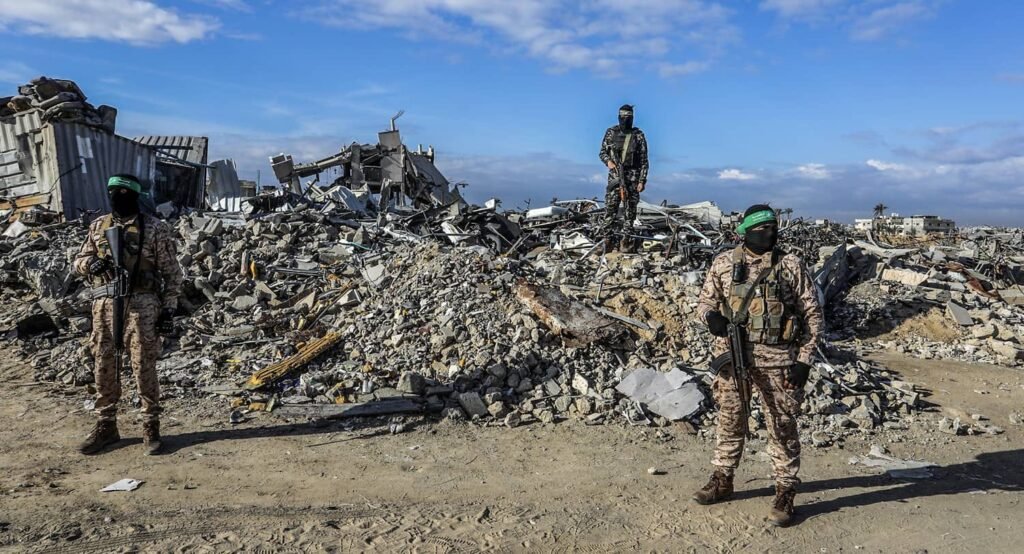
The deeper challenge for Israel involves managing the long term psychological and physical fallout of a decentralized insurgency. When an organization shifts from a formal governing body to a clandestine network, intelligence gathering has to shift too, moving from mapping fixed bases to tracking elusive underground cells and ideological recruitment pipelines instead. That requires a fundamental pivot in operational doctrine, away from broad territorial maneuvers and toward intelligence led, micro targeted counterterrorism operations that can be sustained indefinitely without collapsing the domestic economy or overextending reserve forces.
At the same time, the diplomatic arena remains heavily shaped by the movement’s lingering presence. International bodies and foreign partners frequently pressure Jerusalem to lay out a definitive end state for the territory, yet offering a clear roadmap is nearly impossible while the governance vacuum stays unaddressed. The absence of a moderate, empowered alternative civil authority means any sudden departure by the IDF would immediately invite a resurgence of militant control. That traps the state in a genuine strategic paradox, where military success can’t easily get converted into a permanent political resolution no matter how decisive it looks on paper.
3. Key Strategic Objectives for Stabilization
Converting tactical security dominance into lasting regional stability requires three core operational shifts:
1. Countering Clandestine Re-Emergence: Transitioning from broad territorial maneuvers to intelligence-led, micro-targeted operations aimed at tracking decentralized underground cells.
2. Establishing Alternative Local Governance: Cultivating viable regional and local administrative frameworks to prevent immediate power vacuums upon IDF withdrawals.
3. Overhauling Strategic Deterrence Doctrine: Moving beyond conventional military metrics to address the regional architectures and ideological drivers sustaining asymmetric endurance.
In the end, the movement surviving in a mutated, underground form serves as a stark reminder that military force alone can’t resolve political conflicts rooted in deep historical grievance. As Israel looks toward the future, the real test won’t be whether it can destroy every remnant of the old organization. It’ll be whether it can build a viable regional and domestic framework that denies the ideology any oxygen to regrow at all. Achieving that requires unprecedented cooperation with regional partners, a genuine willingness to rethink local governance structures, and a clear eyed recognition that the war’s conclusion won’t be measured by a single moment of triumph. It’ll be measured by the slow, painstaking, long term stabilization of a profoundly broken landscape instead.