

The recent declaration by Prime Minister Benjamin Netanyahu that United States military assistance is “like welfare” and should be phased out over the next decade marks a watershed moment in the U.S-Israel relationship. While the Prime Minister’s rhetoric, delivered with his signature combative flair, is being framed as an assertion of newfound Israeli financial maturity, it masks a complex geopolitical gamble. By labeling the $3.8 billion annual aid package as an unnecessary crutch, Netanyahu is not merely shifting economic policy; he is attempting to proactively navigate the shifting tides of American domestic politics and the burgeoning internal opposition within the U.S. Congress.
For decades, the Memorandum of Understanding (MOU), which governs the $38 billion in aid covering 2019-2028, has functioned as the bedrock of the bilateral security architecture. It has guaranteed Israel’s Qualitative Military Edge (QME) while tethering the American taxpayer to the defense of the region. However, the political climate of 2026 is fundamentally different. With significant figures in the American legislature, including progressive Democrats and fiscal, hawks, now openly questioning the morality and strategic necessity of continued military funding, Netanyahu’s pivot appears to be a defensive strategy disguised as an offensive one. By declaring “I don’t want it” first, the Prime Minister is attempting to claim the moral high ground, aiming to defuse the growing criticism from those who view aid as leverage to influence Israeli conduct in Gaza or the broader regional conflict with Iran.
The central question, however, is whether this “independence” is grounded in economic reality. Netanyahu justifies his stance by pointing to an Israeli economy nearing $1 trillion, arguing that the aid represents a negligible fraction of GDP. Yet, this narrative ignores the massive, ongoing fiscal strain caused by Israel’s prolonged regional engagement. The state is currently managing an active military presence in southern Lebanon, where Israeli forces have established a 10-kilometre security belt, maintaining high alert levels against the Iranian axis, and navigating a post-war reality that is far from stable.
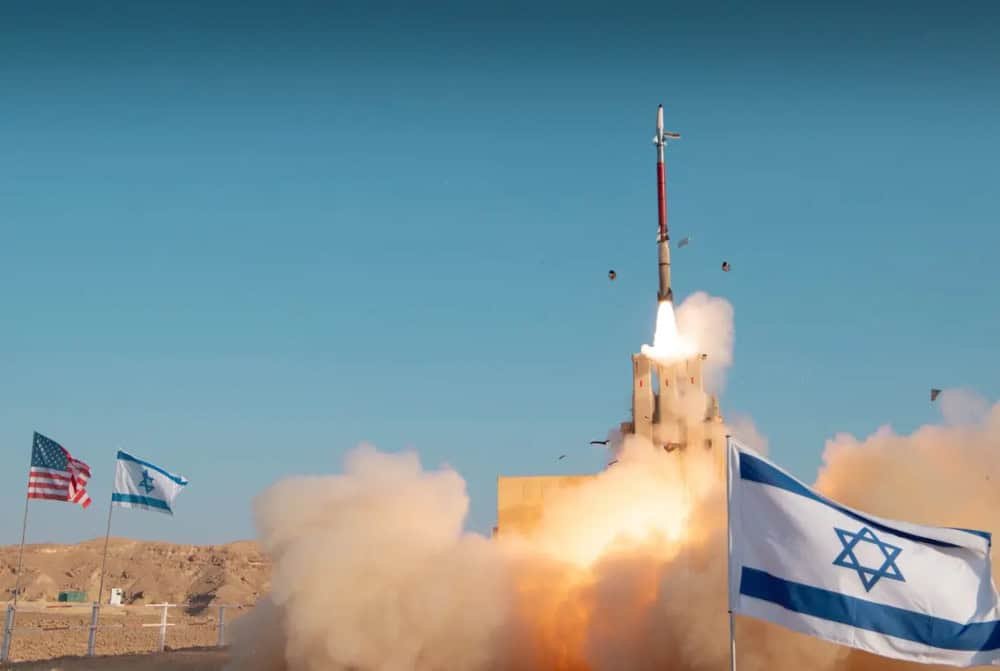
The fiscal implications are significant: defense spending in 2026 has risen to nearly 8% of GDP, up from 4.2% in 2022, and now constitutes roughly one-quarter of the total state budget. Replacing $3.8 billion in predictable, long-term procurement funding with internal resources during such a period of heightened defense spending is a risky proposition. It risks forcing the state to choose between essential civilian infrastructure investment and the maintenance of the military hardware that is currently keeping the regional balance of power in Israel’s favor. Recent budgets have already seen a decline in real civilian expenditure per capita, with sectors like health, education, and welfare facing strain to accommodate the nearly $45 billion defense budget.
Furthermore, the rhetoric is, in many ways, impracticable. The U.S-Israel defense relationship is not merely a transfer of cash; it is a deeply integrated industrial partnership. The aid is tied to the procurement of sophisticated American platforms and deep intelligence sharing, which provides Israel with a layer of security that cannot be replicated by domestic production alone. By distancing Israel from this framework, Netanyahu risks weakening the very alliance that provides the state with its ultimate strategic depth.
Beneath this fiscal posturing lies a clear, albeit subtle, rift. The Israeli administration has been visibly frustrated by the current U.S. approach to Iran, which many in Jerusalem view as an attempt to de-escalate through diplomatic “pauses” or memorandum agreements rather than decisive, permanent pressure. By advocating for independence, Netanyahu is signaling a willingness to break with Washington’s strategic preferences, asserting that Israel will pursue its own security imperatives regardless of the consensus in the White House or Congress.
This move is a high-stakes bet on the resilience of the Israeli economy and the endurance of its domestic political resolve, especially as Netanyahu faces the unprecedented challenge of international legal scrutiny related to the war in Gaza. Whether it succeeds in insulating Israel from international pressure or merely leaves the state more isolated in a volatile neighborhood remains the defining strategic question of the year. Netanyahu’s assertion that Israel can “act first and talk afterwards” might play well with his domestic base, but in the harsh, interconnected reality of 2026, the cost of going it alone may prove significantly higher than any aid package he is so eager to reject.