
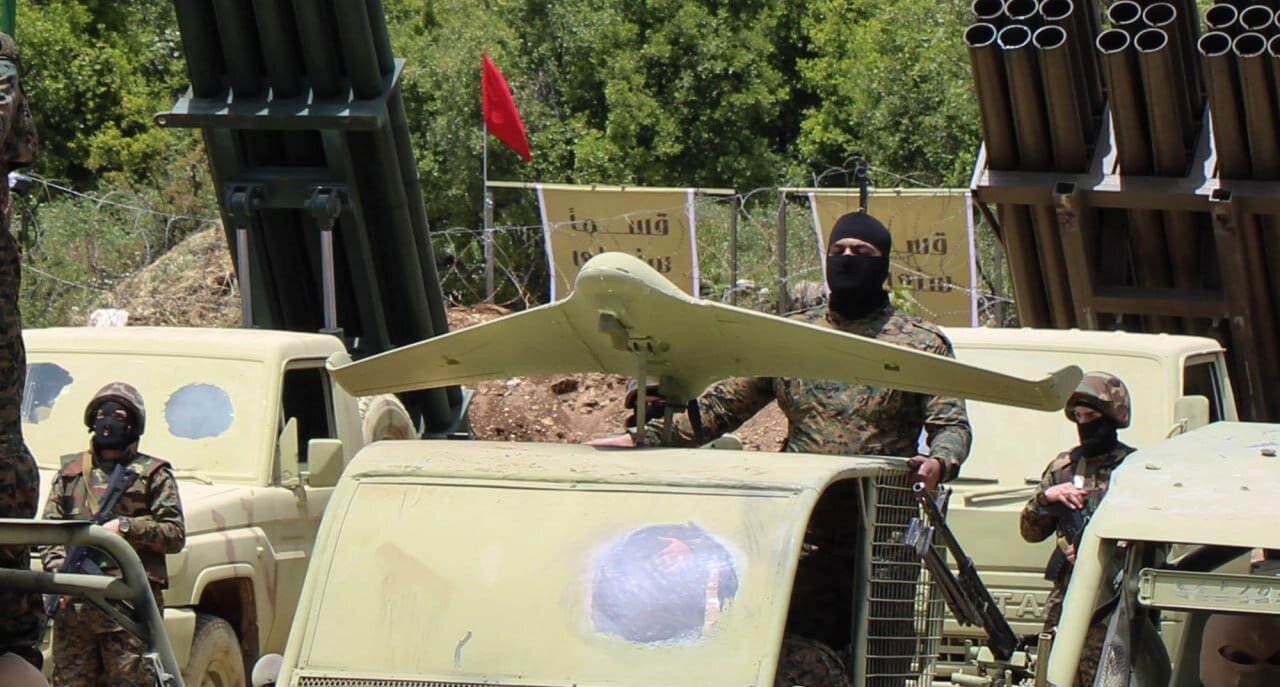
Throughout history, Israel has prided itself on being an innovator in technology in the realm of defense. With precision guided missiles, intelligence networks, defense systems, and aerial superiority, Israel was able to count on the idea that the technological edge could serve as a decisive factor on the battlefield. However, it seems that the increasing threat of Hezbollah’s use of drones highlights the new truth: the future of war will be determined not by its cutting-edge weapons, but by its easy accessibility.
The fact that Israel is still searching for effective answers to Hezbollah’s drone threat months into the Lebanon campaign is not merely a tactical problem. It is a strategic warning. Drones have emerged as one of the few military tools capable of partially neutralizing Israel’s traditional advantages while imposing disproportionate costs on both military operations and civilian life.
Numbers alone account for this worry. The drones of Hezbollah have not only managed to attack Israeli troops, breach defended airspace, and force operational changes, but also proved that even an army armed with some of the best air defense technologies in the world could be vulnerable to such threats.This problem is not exclusive to Israel alone. The conflict in Ukraine has brought about a revolution in terms of military strategy around the globe.
Drones that cost just hundreds or even thousands of dollars have been able to destroy armored tanks that cost millions of dollars.Unlike conventional rockets, drones offer adversaries flexibility. They can conduct surveillance, gather intelligence, direct artillery fire, strike military installations, target infrastructure, and attack troops with precision. Their low radar signature and ability to fly at varying altitudes make detection difficult. Even when detected, interception is often economically inefficient.It results in a dangerous equation, in which Hezbollah is able to attack using unmanned aircraft that are relatively cheap to produce compared to the costly missile interceptors that Israel might have to use in response.
The issue becomes even more pronounced when we consider it through the prism of future conflict.The present issue that we are faced with does not merely involve the existence of Hezbollah’s drones today. Instead, it concerns the path that technological proliferation will take in the region going forward. Over the past decade, Iranian systems and expertise have spread across multiple theaters, from Yemen to Iraq, Syria, and Lebanon.
Every lesson learned by Hezbollah today will likely be studied by other members of Iran’s regional network tomorrow.This means Israel is not confronting a single drone threat but an emerging drone ecosystem.Beyond the deaths on the battlefield, this issue reaches another level as well. Drones create an effective psychological threat. They destroy the feeling of security created by aerial supremacy. While the residents of the north may feel safer from the weakened conventional capabilities of Hezbollah, continued drone attacks create another type of insecurity.
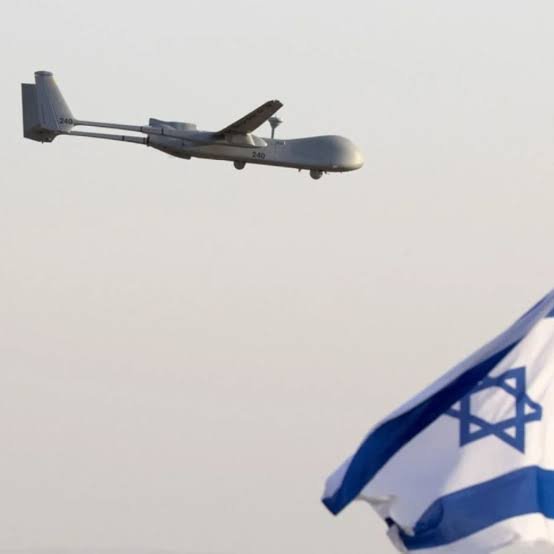
Drones, unlike rockets, are unpredictable since one can never be sure if the aircraft is a drone until it makes its impact. It causes constant worry when it is hovering above the sky.It is in this light that the Defense Ministry’s quest for innovative technology should be understood as an adaptive strategy and not just acquisition.
This will certainly require layers of security. No single system will be able to address the drone problem. Electronic warfare measures, lasers, artificial intelligence-based sensors, radar, cyber-attacks, and kinetic defense systems all must be brought to bear against the drone menace. Disrupting their production is as important as intercepting them.The fight against drones has many similarities to Israel’s previous fight against rockets. In those early years when rockets were being fired at Israel, there were very few defenses in place, and Israel was continually criticized for its vulnerability.
The advent of missile defense systems changed all that.This problem may require just such a transformation.But there is a significant distinction. Rocket paths are predictable. Drones are agile and increasingly autonomous. In the future, drones will include artificial intelligence, swarming technologies, and improved ability to withstand jamming.Such considerations prompt wider reflections on Israel’s military planning.
For years, military supremacy has been determined by tanks, airplanes, and heavy weaponry. In today’s world, however, military supremacy may be achieved by adapting to the disruptive potential of affordable technology.Thus, the lessons to be learned from Lebanon go beyond Hezbollah. Israel can see how the air war is being democratized.
Weapons systems once restricted to powerful nation-states are now at the disposal of non-state groups that operate from villages, caves, and concealed firing platforms.Where rockets became the focus of Israel’s security policies for the first quarter of the new century, drones could be the concern of the second.
The result of such an adaptation will impact not just the Israeli north frontier but also the nature of any future conflict Israel may engage in. No longer is the struggle one of territory acquisition; it has become a race between Israel and its enemies, in which Israel must retain its technological superiority against ever cheaper and more accessible threats.