By Israel Dispatch
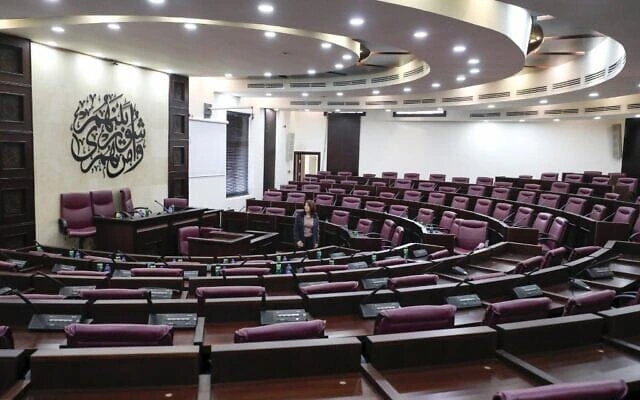
When Palestinian Authority President Mahmoud Abbas issued a decree on October 10, 2026, canceling legislative elections scheduled for November 28 and pushing them back to September 11, 2027, the official explanation sounded remarkably familiar. Once again, Ramallah invoked Jerusalem. Government lawyers arguing before the Palestinian Administrative Court in Case 450/2026 claimed that holding the vote on time would have disenfranchised East Jerusalem residents, while insisting that the president’s decree constituted an unreviewable act of sovereignty. For Israelis watching closely from across the seam line, this recurring excuse deserves far more scrutiny than it usually receives. Invoking Jerusalem to justify postponing democracy does not protect the city’s Palestinian residents. Instead, it shields an aging leadership in Ramallah from accountability while delaying the emergence of credible Palestinian partners with whom Israel could ever hope to negotiate.
The pattern is impossible to ignore. Palestinians have not held a national legislative election since January 2006 or a presidential vote since January 2005. In April 2021, Abbas canceled scheduled parliamentary elections at the last minute, citing Israeli restrictions on voting in East Jerusalem even though Palestinian polling at the time showed 69 percent of residents wanted the vote to proceed regardless. Five years later, the exact same script played out again. Yet as Jerusalemite activist and Masar Jadid leader Samer Sinijlawi pointed out in his legal challenge and public remarks, Ramallah’s professed devotion to East Jerusalem vanishes the moment elections are off the calendar. The Palestinian Authority’s published 2026 budget allocated just 56.6 million shekels to the Jerusalem Ministry, a mere 0.33 percent of total public expenditure. Residents of East Jerusalem remain starkly underrepresented in cabinet posts, judicial bodies, security leadership, and the diplomatic corps. Using a neglected constituency as a shield to cancel elections compounds their marginalization rather than relieving it.
Even more revealing is what Ramallah actually feared on November 28. Privately, Palestinian officials often warn Western diplomats that any ballot risks handing power to Hamas, a fear that instinctively resonates in Jerusalem after two decades of Hamas rule in Gaza and the horrors of October 7. Yet the legal framework drafted for the 2026 legislative race explicitly required every candidate and electoral list to commit to the political program and international agreements of the Palestine Liberation Organization. That condition posed a severe barrier to direct Hamas participation. Meanwhile, reformist movements such as Masar Jadid, alongside younger independents and women candidates mandated under updated quota rules, were preparing to offer voters an alternative to both Fatah’s stagnation and Islamist extremism. According to Sinijlawi, roughly 62 percent of eligible Palestinian voters have never cast a ballot in a national election. What entrenched leaders in Ramallah feared most was not a Hamas sweep, but a generation of pragmatic reformers demanding transparency, auditing public funds, and challenging a political monopoly.
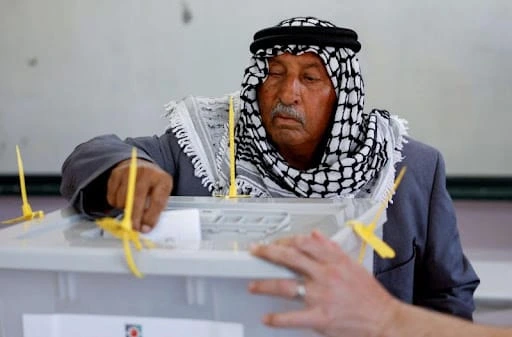
For Israel, the indefinite suspension of Palestinian democracy is not merely an internal Palestinian affair; it is a direct strategic liability. Israel’s central critique of the Palestinian Authority for years has been its weakness, corruption, and lack of popular legitimacy. When Ramallah governs purely by presidential decree while public schools open only three days a week amid severe fiscal strain, the authority’s credibility erodes further every month. A Palestinian leadership terrified of facing its own voters will never possess the domestic mandate required to reform its security services, curb incitement, overhaul school textbooks, or take responsibility for civilian governance in postwar Gaza. Instead, canceling elections leaves a political vacuum that rewards cynicism and radicalism while ensuring that no legitimate, accountable leadership emerges on Israel’s doorstep.
International donors share responsibility for enabling this cycle. When Abbas postponed the vote in October, the European Union expressed deep regret, while Australia, Canada, France, and the United Kingdom issued a joint statement warning that democratic renewal is inseparable from a viable two state horizon. Yet polite expressions of disappointment carry zero weight when European and Arab capitals continue writing checks without demanding enforceable electoral benchmarks or practical voting arrangements for Jerusalemites. If Western governments truly want a reformed Palestinian Authority capable of governing both the West Bank and Gaza, they must stop accepting Jerusalem as a blank check for authoritarian delay.
As coalition negotiators in Jerusalem work toward forming Israel’s next government ahead of the December 6 mandate deadline, Israeli policymakers should also reflect on their own stake in Palestinian political renewal. Security coordination with Ramallah remains vital for preventing chaos in the West Bank, yet tactical stability cannot substitute for a functioning partner. Israel should work with international mediators to establish clear, practical voting mechanisms in East Jerusalem suburbs or designated centers ahead of the rescheduled September 2027 date, stripping Ramallah of its favorite alibi once and for all. Democracy carries risks in the Middle East, as Israelis know better than anyone. Still, an ossified leadership hiding behind excuses poses a far greater danger than letting Palestinians finally choose a new path.
About the Author
Israel Dispatch provides authoritative, non partisan analysis on Israeli security, political dynamics, regional geopolitical shifts, and sovereign foreign policy.