By Noam Shalev
With less than two weeks remaining before Gadi Eisenkot’s coalition mandate expires on December 6, Israel finds itself caught between urgent national challenges and familiar political paralysis. Following the October 2026 elections, President Isaac Herzog tasked the Yashar leader with forming a government after 67 lawmakers recommended him, compared with 46 for Benjamin Netanyahu. Yet the Knesset arithmetic remains stubbornly divided. Likud holds 27 seats, Yashar 21, and Naftali Bennett’s B’Yachad 12, giving those three parties exactly 60 seats in a 120 member parliament. Bringing in Avigdor Liberman’s Yisrael Beytenu would lift a unity coalition to 67 seats, enough to govern without relying on ideological extremes. Whether Netanyahu and Eisenkot can bridge deep personal distrust and sharply different visions for the country before the clock runs out will determine if Israel gets a functioning government or slides back toward gridlock.
Calls for a broad coalition are growing louder from inside the country’s periphery as well as its political center. Earlier in November, twelve mayors from cities including Lod, Dimona, and Ofakim urged Netanyahu and Eisenkot to set rivalries aside and form a wide government. Bennett echoed that sentiment at the Knesset on Monday, telling soldiers that people who can serve together in a tank can also run a country together. He has floated a unity arrangement with Likud in which Eisenkot would take the first turn as prime minister. Still, after four hours of talks in Herzliya on Sunday between Likud faction chair Ofir Katz, Yashar lawmaker Chili Tropper, and Netanyahu’s former chief of staff Yoav Horowitz, Eisenkot’s office noted that a premiership rotation had not even been discussed.
The core obstacle is obvious to every voter watching the negotiations. Likud insists that Netanyahu must lead first, while much of Eisenkot’s camp campaigned on replacing him. At the same time, Eisenkot’s alternative paths carry heavy political baggage of their own. A narrow minority government backed from the outside by Ra’am and the Joint List, which together hold 19 seats, is favored by Democrats leader Yair Golan. Yet Liberman has flatly rejected relying on Arab parties, and Bennett has told Eisenkot he will not support such a framework at this stage. Turning instead to the ultra Orthodox factions, Shas and United Torah Judaism, would force Eisenkot to dilute his central campaign promise on equal military service.
Public opinion suggests Israelis are far more pragmatic than their politicians. A November survey by the Jewish People Policy Institute found that 36 percent of respondents preferred an Eisenkot led bloc backed by Arab parties and 23 percent favored a Likud Yashar coalition with additional partners, while 51 percent declined to rule out any party in a potential four party unity government. Voters understand what narrow coalitions cost during moments of national crisis. In January 2025, National Security Minister Itamar Ben Gvir pulled Otzma Yehudit out of Netanyahu’s coalition over the Gaza ceasefire and hostage release deal. In a 61 seat government, a single radical faction holds veto power over life and death decisions. A broad coalition built around Likud, Yashar, B’Yachad, and Yisrael Beytenu would finally free Israel’s cabinet from that kind of extortion.
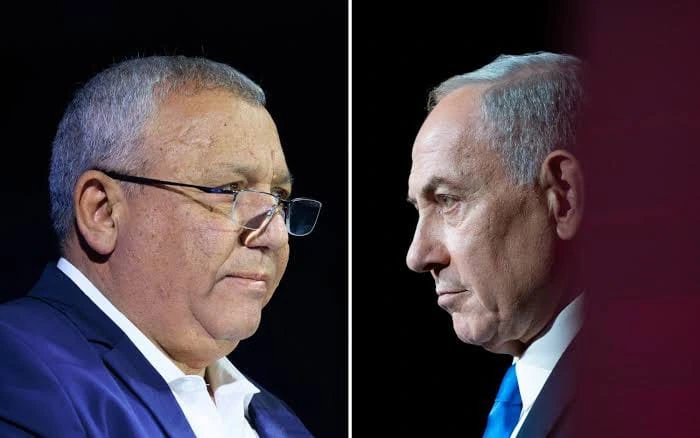
Security realities make a unified cabinet even more pressing. On Monday, Eisenkot and Netanyahu clashed publicly over the immediacy of the Iranian threat. Eisenkot stated that he saw no urgent danger requiring military action before a new government is sworn in, warning behind closed doors against decisions driven by political considerations. Hours later, Netanyahu countered that Israel faces immediate perils and accused critics of downplaying threats for partisan reasons. With regional tensions simmering and Washington signaling that patience over stalled Gaza diplomacy and Iranian escalation is wearing thin, Israel cannot afford two rival centers of security messaging. Netanyahu and Eisenkot belong in the same security cabinet, testing intelligence assessments together and sharing accountability for decisions that affect every citizen.
Domestically, only a broad coalition can tackle two festering wounds that continue to divide Israeli society. The first is ultra Orthodox conscription. Reserve soldiers have borne an extraordinary burden over the past three years, disrupting families, workplaces, and universities. According to Bank of Israel estimates, a single month of reserve duty for a thirty year old worker costs the economy roughly 38,000 shekels. A coalition dependent on haredi parties seeking sweeping exemptions will never pass credible enlistment targets. A Likud Yashar government freed from partisan blackmail could establish binding annual recruitment quotas, enforce real financial sanctions for noncompliance, and publish transparent progress reports.
The second imperative is truth and accountability over October 7. Just last week, the October Council representing bereaved families, survivors, and former hostages criticized Eisenkot’s bloc for dragging its feet on launching a formal state commission of inquiry. Committing at the new cabinet’s very first meeting to establish an independent state inquiry would begin restoring public trust in state institutions. When both Likud and Yashar sit around the cabinet table, neither camp can dismiss the commission’s findings as a partisan witch hunt.
Still, goodwill alone will not hold a coalition together. Israelis remember May 2020, when Netanyahu and Benny Gantz signed a detailed rotation agreement that collapsed months later over a deliberately stalled state budget, preventing Gantz from ever entering the prime minister’s office. Any written deal between Netanyahu and Eisenkot must close that loophole completely. It must specify who serves first, lock in an automatic transfer of power if the budget fails, and commit Netanyahu to leaving Ben Gvir in the opposition. December 6 is fast approaching. Both men owe the country more than tactical maneuvering; they owe Israel a stable, serious government capable of leading through war and recovery alike.
About the Author
Noam Shalev is a Political Affairs Commentator covering Israeli government policy, US Israel relations, coalition politics, and diplomatic engagement across the Middle East.