By Israel Dispatch
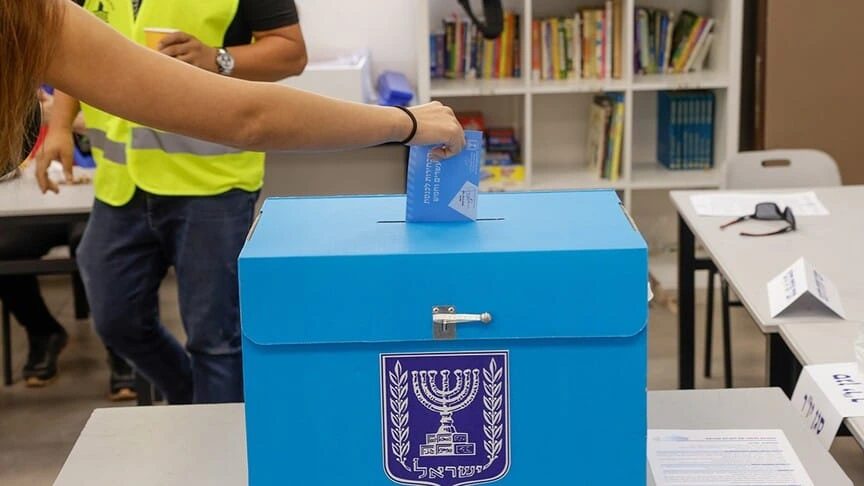
Israel’s latest election, for all its drama and high turnout, has not given the country what it sorely needs: a way out of deadlock. Voters showed up in record numbers, parties old and new battled for attention, yet the Knesset emerged just as fractured as before, packed with camps that can barely speak to each other, let alone govern together. At its heart, this is not about swapping out leading personalities. It is about a widening gap between what the ballot represents and what the government can actually accomplish.
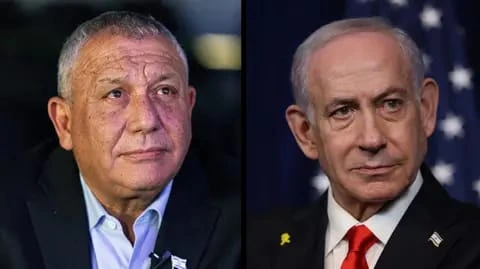
There was real hope that the October 27 election would finally draw some lines under years of war, social turmoil, and endless political maneuvering. Instead, Israelis woke up to another mess of numbers. Likud pulled 27 seats. Eisenkot’s Yashar, the new kid on the block, got 21. Netanyahu’s right wing bloc landed at 53 seats; the opposition at 48. Arab led parties, the Joint List and Ra’am, together scooped up 19. We are right back where we have been: no clear path to the 61 seats needed for a majority. No one camp can form a government on its own.
It is one thing to win an election. It is quite another to win the chance to actually govern. Likud may have topped the poll, but it does not control the numbers. Eisenkot’s grouping, despite the fanfare, also falls short. The arithmetic keeps Israel trapped in a familiar loop: a hung parliament, stuck with no obvious exit ramp.
But step back, it is the surge of the Arab parties that changes the conversation the most. The Joint List and Ra’am now hold 19 seats, more than we have seen in recent years. And turnout hit nearly 78 percent, the highest since 1999. Israelis, including those usually pushed to the edge of the national debate, came out in force. This was not political apathy; it was a wave of mobilization by people determined to be heard.
So, what gives? Israel’s proportional electoral system is supposed to turn votes into representation. On paper, it does. But when certain parties, especially the Arab ones, cannot ever break into the coalition game, their “representation” becomes hollow. This does not mean every faction needs a government seat, or that basic disagreements over ideology and security should vanish. Still, a democracy is in trouble when whole sections of its citizens can elect politicians who then get boxed out of any real influence.
Look at how the blocs behave. Netanyahu pushes for a hard right government, firmly shutting the door to Arab parties as partners. Eisenkot talks about serving “all Israelis,” but even his options hit brick walls, as ideological splits and old red lines keep shutting down possible coalitions. So parties pile up seats without a real chance to govern. Influence on paper, but not in practice.
It is not just about Arab representation either. Plenty of new political ventures tried to chip away at the old order. Yoaz Hendel’s Reservists focused on military service and economics. Ofer Winter introduced an energetic slate, and the Haredi Public party challenged established ultra Orthodox factions. Not one of these fresh faces broke the 3.25 percent threshold. The rule meant to weed out too many small parties now muzzles new ideas altogether. Earn anything less than the cutoff, and those votes simply disappear, leaving their backers out in the cold.
And here is a twist, not every rookie politician brings real change, and not every veteran is stuck in old habits. Eisenkot’s Yashar party jumped straight to 21 seats, clear proof that Israelis are hungry for alternatives. Even Naftali Bennett found a path back. The appetite for change is real, but the system keeps shoving newcomers into rival camps, blocking any workable majority.
This is not a new cycle for Israel. Between April 2019 and late 2022, there were five national elections, each one ending with a government that could barely hold itself together. The same old fights over religion, army duty, supreme court powers, and the Palestinian question, it all keeps unraveling the coalition fabric. The latest election drags these underlying tensions right back to the foreground, just as raw as ever.
And after October 7, 2023, the stakes feel higher. Hamas’s attack blew open serious faults in Israel’s security strategy and left the nation reeling. War has drained the reserves, exhausted families, and put huge strain on public finances and the economy. Now, impossible questions crowd the agenda: accountability for failures, the future of Gaza, the fate of hostages, mandatory service, and where the country goes next.
Yet, despite all this urgency, the political system cannot shape these crises into a common vision. Sure, everyone agrees security is critical, but ask who is to blame, or which way to steer the ship, and the divides snap wide open. Economic and religious secular battles are just as stubborn. None of these arguments get solved by simply shuffling ministers.
Chasing stability is no cure all either. Throwing together a broad coalition might land a majority, but numbers alone will not buy direction or discipline. Too many clashing agendas, and nothing gets done. On the flip side, narrow governments end up at the mercy of small parties with oversized demands.
The coalition talks ahead will show whether Israel’s leaders have the nerve to break from old campaign lines. Netanyahu’s side is still eight seats short. Eisenkot needs partners too. Arab politicians now hold the balance, but the idea of working with them sends others running. The idea of a “unity government” keeps coming up, but it requires more compromise than parties have shown any stomach for.
In the end, the problem is not a lack of political engagement, quite the opposite. The huge turnout proves Israelis are desperate to have a say in where the country heads next. But participation is not enough if the system cannot translate it into a government able to reflect and handle the nation’s deep divisions.
Change will take more than fresh faces or new party logos. The real test is whether Israel’s leaders can negotiate, recognize differences, and shoulder responsibility for the whole country, not just their base. Democracies will not last if big chunks of the electorate remain locked out when power is being shared.
After October 7, the questions facing Israel, about its future, its safety, and its identity, grew only sharper. If the new Knesset sinks into another cycle of paralysis, those answers will get further out of reach. The election exposed not just the tiredness of some old leaders, but the limits of a system that measures victory through rival blocks, not workable governance.
The next government needs more than a Knesset majority; it needs an understanding broad and elastic enough to stretch across a deeply fractured society. Without that, even the bravest new coalition risks becoming just another chapter in Israel’s unsolved political story.
About the Author
Israel Dispatch provides authoritative, non-partisan analysis on Israeli security, political dynamics, regional geopolitical shifts, and sovereign foreign policy.