By Israel Dispatch
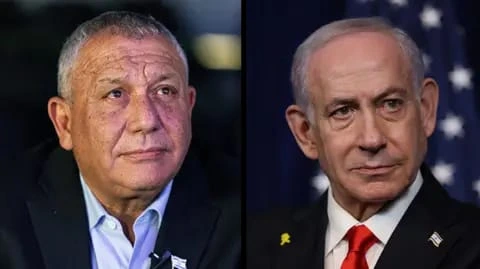
The exit polls following Tuesday’s national election present a striking and paradoxical picture for the country. On paper, two men have every reason to pop champagne corks in their respective campaign headquarters. Former IDF Chief of Staff Gadi Eisenkot, whose newly formed Yashar party began the race hovering precariously in single digits, pulled off a staggering political climb. Reaching over twenty seats according to initial projections, Eisenkot cemented himself as the undisputed head of the center left and right leaning opposition seeking to replace Benjamin Netanyahu. At the same time, Netanyahu secured his own remarkable personal triumph. Defying late polls that signaled a potential breakdown of his traditional base, Likud rallied to claim around 26 or 27 seats, ensuring it remains the single largest party in the 25th Knesset.
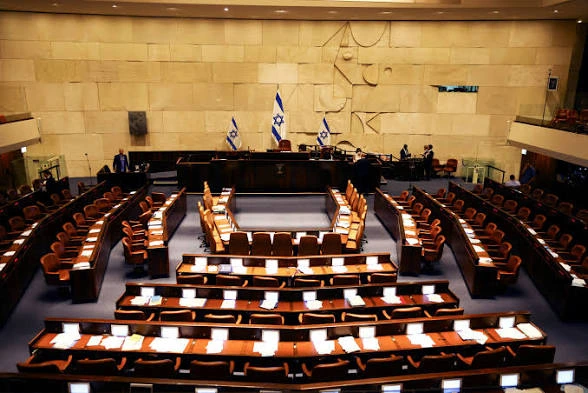
Yet, as the immediate euphoria clears, the sober reality confronting the Israeli public is starkly different. Neither leader won the country a stable future. Neither secured the 61 seat parliamentary majority required to govern. What Israel inherited from the ballot box is not a clear mandate, but another grinding exercise in political arithmetical paralysis.
The victory claims made by campaign strategists on both sides crumble when examined against the actual numbers. Netanyahu’s right wing and religious bloc stands frozen at around 50 seats. This leaves him far short of a coalition threshold, reliant entirely on complete dysfunction among his rivals to survive. Meanwhile, the broad spectrum of parties explicitly committed to ending Netanyahu’s reign accounts for roughly 70 seats. Yet this impressive tally is an optical illusion rather than an operational government. It spans ideological extremes that range from Avigdor Liberman’s hawkish Yisrael Beyteinu to Mansour Abbas’s Islamist Ra’am party and the Hadash Ta’al list.
To translate this anti Netanyahu sentiment into a functioning cabinet, someone will have to violate core campaign pledges made to the electorate. The opposition voters spoke clearly by making Eisenkot their primary standard bearer, sending an unmistakable message to Naftali Bennett and Avigdor Liberman to abandon their plans for mandatory rotation agreements. The electorate designated Eisenkot as the senior partner. But Eisenkot’s path to the Prime Minister’s Office is littered with severe political landmines. He must either bridge a historically insurmountable gap to rely on Arab party support or convince conservative opposition figures to share a table with factions they spent months repudiating on the campaign trail.
Conversely, Netanyahu will actively exploit every hour of post election confusion. His strategy relies entirely on division within the opposition camp. He expects Eisenkot, Bennett, and Liberman to founder on the complex question of Arab partnership. Once those negotiations stall, Likud will dangle tempting political lifelines to individual defectors or entire party slates.
Yet any potential partner weighing a deal with Netanyahu knows the entry cost will be exorbitant. Joining his fold would require forcing Likud to concede on issues that strike at the core of the current coalition’s identity. Potential partners would demand an immediate state commission of inquiry into the systemic failures surrounding October 7, a binding legislative resolution to the ultra Orthodox draft exemption crisis that continues to fracture Israeli society, and an explicit refusal to let Netanyahu take the first shift in a prime ministerial rotation. For a Prime Minister whose political survival hinges on his traditional partner base, satisfying these conditions is nearly impossible.
The most troubling takeaway from the exit poll data lies outside party seat counts. It is found in the underlying democratic health of the nation. Arab Israelis turned out in historic numbers, securing a combined 17 to 18 seats between Ra’am and the Joint List. In a healthy constitutional republic, high turnout among minority citizens is treated as a milestone of civic integration and democratic vitality. Instead, prominent political figures spend campaign cycles framing high Arab voter participation as an existential danger to the Jewish state.
This toxic rhetoric deserves rigorous moral rejection. Portraying a minority group exercising its foundational right to vote as a national threat damages the delicate internal fabric of our nation. Arab Israelis are full citizens under the law, entitled to the rights promised in Israel’s Declaration of Independence. Political disagreement over coalition eligibility is legitimate; delegitimizing the vote of two million citizens is a dangerous path toward democratic erosion.
Time is now the most critical commodity in Jerusalem. Eisenkot and his potential partners must move swiftly to test whether a viable government can be assembled, whether through a formal majority coalition or a minority structure supported from the outside. Delay invites chaos. Netanyahu will not wait passively while opposition figures debate terms; he will work relentlessly to pull apart their fragile coalition before it ever reaches the Knesset floor.
Compounding this political fragility is a volatile regional environment. With preparations underway across the defense establishment and the threat of direct military escalation with Iran looming large, the country cannot afford an extended period of political drift. A sudden security crisis could easily be weaponized to force an emergency national unity government under Netanyahu’s terms, swallowing the clear mandate for change expressed by the majority of voters.
The high voter turnout across all sectors reflects a public deeply invested in the state’s trajectory and exhausted by endless political instability. Israelis stood in long lines because they care deeply about the country’s defense, economy, and democratic character. The electorate fulfilled its duty under challenging national circumstances.
Celebrations in party headquarters are entirely premature. Individual political survival is not a national victory, and a high seat count is meaningless if it yields a paralyzed parliament. Until our leaders show the political courage required to compromise, build stable bridges, and form a coherent government, the Israeli people have not won anything at all. The real test begins now.
About the Author
Israel Dispatch provides authoritative, non-partisan analysis on Israeli security, political dynamics, regional geopolitical shifts, and sovereign foreign policy.