
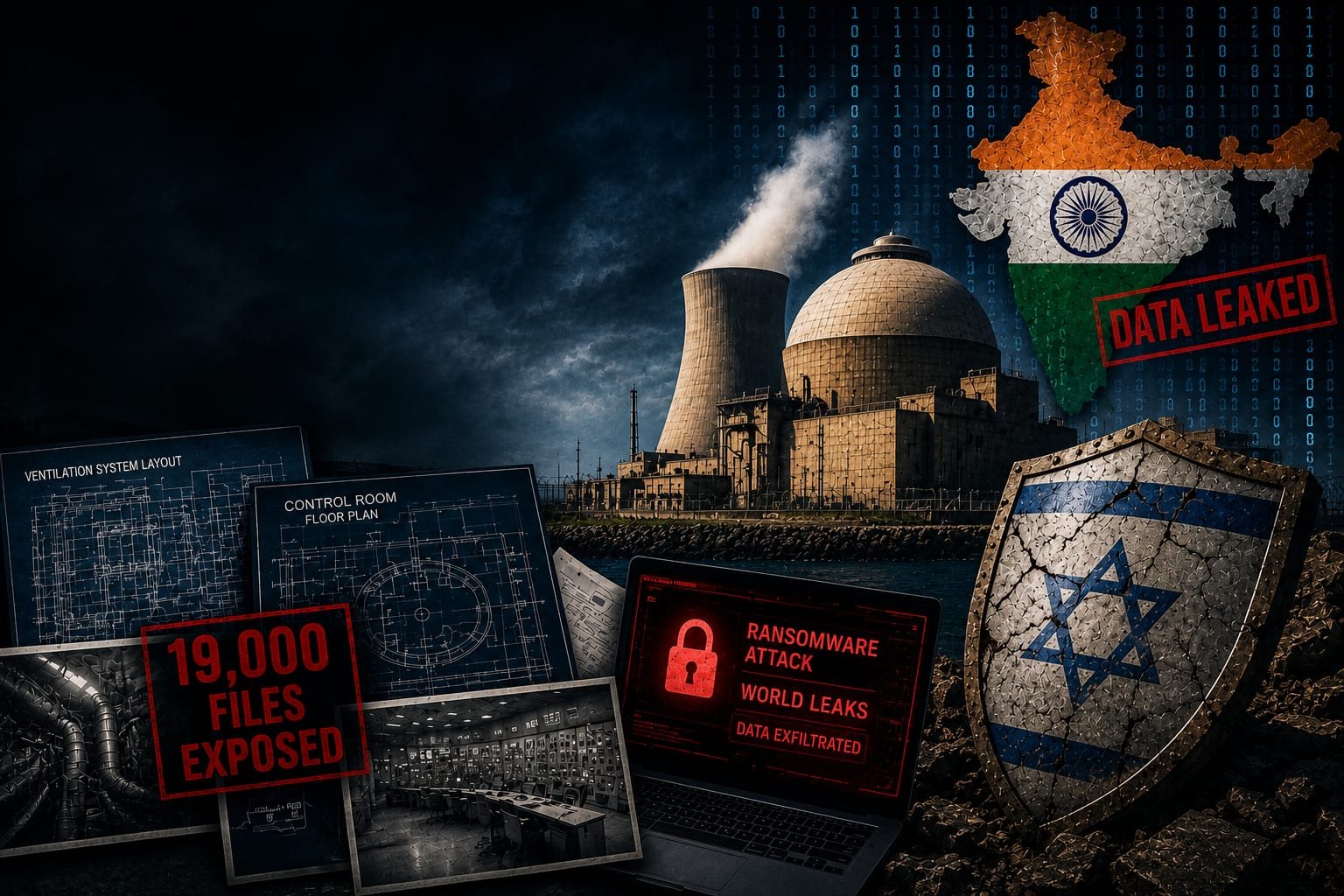
The digital age has brought a chilling paradox to modern warfare: the most devastating weapons can now be compromised through the most mundane vulnerabilities. In the heart of Tamil Nadu, India’s largest nuclear power facility, the Kudankulam Nuclear Power Plant, is learning this lesson in real time. A massive, highly sensitive data dump by the ransomware syndicate World Leaks has exposed the soft, civilian underbelly of India’s strategic nuclear expansion, reminding the world that air gapped reactor cores are only as secure as the third party contractors hired to build their supporting infrastructure.
For Israel, a country that pioneers cyber defense and lives under the perpetual shadow of regional adversaries seeking its destruction, this breach is not merely an Indian domestic issue. It is a terrifying blueprint of modern vulnerability. The incident must be dissected as a cautionary tale of how the sprawling, outsourced supply chains of critical atomic infrastructure represent the premier security failure of our time.
The raw mechanics of the Kudankulam breach are deeply unsettling. The hacker group published nearly 19,000 highly sensitive files, which were part of a larger cache of over 850,000 documents exfiltrated from the servers of Reliance Infrastructure, a key contractor for the facility. The compromised data spans almost a decade, from 2016 to mid 2025, and details the infrastructure of the under construction Units 3 and 4. While the state run Nuclear Power Corporation of India was quick to issue a reassuring statement clarifying that the core reactor systems, supplied by Russia’s Rosatom, remain secure and unaffected, this corporate hand waving misses the point entirely.
The leaked files contain detailed blueprints for ventilation and cooling systems, alongside complete floor layouts for a common control room. In the dark calculus of sabotage and cyber warfare, you do not need to hack a reactor core to cause a meltdown. An adversary armed with the precise layouts of a plant’s cooling ducts and common control rooms has been handed a roadmap for catastrophic kinetic or digital sabotage. Nickolas Roth, a senior director at the Nuclear Threat Initiative, captured the danger perfectly, noting that these documents reveal to hostile actors exactly who has access to the project and which systems that access can reach.
This is not Kudankulam’s first brush with digital peril. In 2019, the facility suffered an intrusion on its administrative network linked to the North Korean state sponsored Lazarus Group. Back then, Indian authorities used the same playbook, downplaying the incident because the operational networks were air gapped. But this recurring vulnerability exposes a systemic, cultural blind spot in India’s digital defense architecture. The country ranks among the most targeted nations globally for cyberattacks, suffering millions of compromised accounts annually.
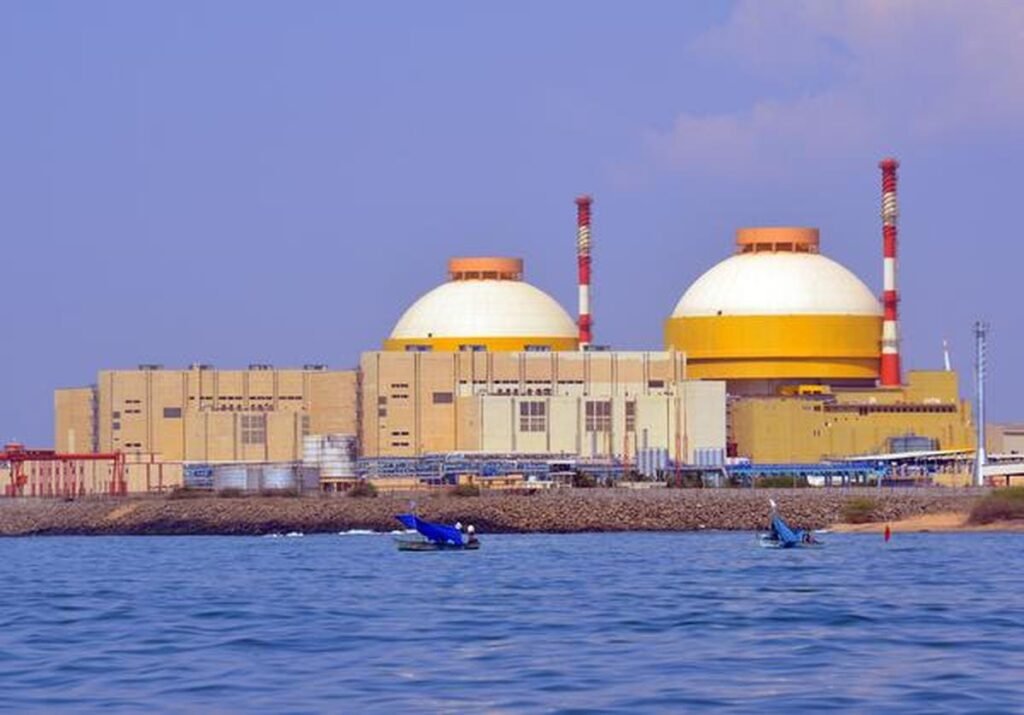
The strategic implications are immense. Prime Minister Narendra Modi has made the rapid expansion of nuclear energy a cornerstone of India’s economic and geopolitical ascent. The compromised Units 3 and 4 are designed to inject a massive 2,000 megawatts into the southern power grid by 2027. When a nation’s marquee energy project, backed by a hundred million dollar anti terrorism insurance policy, is pillaged by a ransomware gang, it signals to global adversaries that India’s critical infrastructure is ripe for exploitation.
The true lesson of this breach lies in the danger of third party supply chains. Modern states no longer build megaprojects in isolation. They rely on an intricate web of private contractors, sub contractors, and third party data providers. Reliance Infrastructure housed its data with Yotta, a private data center provider. Though Yotta claims to have detected and halted the active ransomware execution in late May, the hackers had already quietly exfiltrated gigabytes of project data. This reveals a devastating lag in detection and mitigation. A security chain is only as strong as its weakest link, and in this case, the weak link was a corporate server far removed from the physical, heavily guarded perimeter of the nuclear plant itself.
This vulnerability is particularly resonant for Israel. The Jewish state is a global hub for cybersecurity, yet its own critical infrastructure, from water treatment facilities to power grids, is under constant, sophisticated bombardment by Iranian and proxy cyber units. Israel has long pioneered the concept of a centralized, nation wide shield. However, the Kudankulam incident proves that even the most rigorous state level defense can be bypassed if a private contractor’s cybersecurity posture is lax.
Furthermore, the threat of sabotage is no longer purely digital. The exposure of physical layouts, vendor lists, and equipment photographs provides hostile intelligence agencies with the exact technical specifications needed to manufacture compromised hardware. This is the reverse engineering of the Stuxnet methodology. Instead of a sophisticated state actor quietly inserting a worm into a closed system, a rogue state or terror group can now buy the blueprints of a nation’s critical infrastructure on a dark web marketplace for the price of a bitcoin ransom.
To prevent these vulnerabilities from turning into regional disasters, countries pursuing nuclear expansion must fundamentally change how they police their partners. Nuclear security can no longer stop at the barbed wire fences of the facility. The state must treat every contractor, supplier, and IT vendor as an extension of the reactor itself. This requires imposing non negotiable, state mandated cyber standards on private partners, complete with continuous, real time monitoring of their networks.
The Kudankulam leak is a stark warning to the international community. If we continue to allow the private builders of our most sensitive facilities to operate with civilian grade cyber defenses, we are practically inviting a catastrophic event. Air gaps are a twentieth century solution to a twenty first century threat. In an interconnected world, the blueprints of our destruction are just one compromised password away.